
WhatsApp Business API for Real Estate: Automate Leads, Property Listings & Client Enquiries
WhatsApp Business API for Real Estates – Automate leads & Property Listings In today’s online-first real estate market, convenience and speed are more important than ever. Today’s homebuyer wants immediate answers, easy scheduling of site visits, and easy access to listings – all from the convenience of their mobile device. For real estate agents, the WhatsApp Business API for Real Estate has become a game-changer to address these ever-growing demands. The WhatsApp Business API enables real estate agents to remain in touch with potential clients at all stages of their home-buying process through automated responses, personalized messages, and efficient customer support. This article will discuss what a WhatsApp API Chatbot for real estate is, how it works, and why it can give your real estate business a competitive advantage. How a WhatsApp Chatbot for Real Estate Helps Capture Property Leads A WhatsApp chatbot for real estate is an automated helper that is integrated into your WhatsApp Business account and automatically responds to customer inquiries without the need for human intervention. For property hunters, this is an instant way to access property listings, prices, images, and information at any time. For real estate agents and developers, this reduces the burden of manual responses, separates serious leads, and increases response rates, which can increase the number of conversations converted into qualified property leads. Chatbot Services for real estate business help buyers get instant property info while agents save time and convert more leads — join Wacto today. Key Benefits of WhatsApp Business API for Real Estate ✔ Instant replies to property enquiries ✔ 24/7 lead capture without staff ✔ Automatically shares listings, images, and details ✔ Collects customer contact info & requirements ✔ Books site visits and call appointments ✔ Saves time and reduces repetitive tasks ✔ Improves lead quality and conversion rate Benefits of WhatsApp Automation for Real Estate Businesses Manual handling of property inquiries may end up slowing down even the most organized real estate groups. By using WhatsApp automation for real estate, you can optimize communication, respond faster, and provide a seamless property search experience for every customer. A clever WhatsApp chatbot assists you in: Auto-sharing property listings – Upload your list of properties just once and share images, prices, descriptions, and map coordinates instantly with potential buyers. Keyword-based search – Allow customers to search using keywords such as 2BHK in Hyderabad or commercial property for less than ₹50,000, and the chatbot will immediately display similar properties. Simple in-chat filters – Allow customers to choose location, price, property type, or amenities right within WhatsApp for faster results. Save time & increase response speed – Minimize manual work while ensuring customers receive instant and accurate property information at all times. By using WhatsApp API automation for real estate business will spend less time answering repetitive customer inquiries and more time closing deals, while customers also enjoy a fast and hassle-free property search experience. WhatsApp CRM Integration for Real Estate: Improve Lead Management WhatsApp CRM Integration for real estate industry assists real estate agencies in managing and acting upon property-related inquiries quickly, converting conversations into potential leads. With the integration of WhatsApp and your CRM, you can automatically store customer information, monitor conversations, and follow up at the appropriate time, ensuring that no potential customer is left behind. The integration of WhatsApp and CRM helps in faster response times and better decision-making. Key Benefits of WhatsApp CRM Integration for Real Estate: Instant lead capture from WhatsApp chats Auto-sync client data to CRM Faster response & follow-ups Centralized conversation history Better lead tracking & status updates Personalized property recommendations Higher conversion with timely engagement How to Use WhatsApp Marketing for Property Booking Inquiries By utilizing the WhatsApp API, real estate companies can process property booking inquiries faster, smarter, and more professionally. By integrating the API with your website or CRM, you can automatically respond to customer inquiries, send property information, arrange property visits, and finalize bookings in real time. Advantages of WhatsApp API also enables you to send images, brochures, location links, and payment details, making it easy and convenient for buyers to book properties. WhatsApp API benefits for booking inquirie ✔ Instant auto-reply to new property inquiries ✔ Share photos, price, and availability quickly ✔ Easy site-visit scheduling and reminders✔ Secure booking confirmation messages ✔ Multi-agent support for faster responses ✔ Track customer conversations and leads Best WhatsApp Business API Provider for Real Estate Businesses Find the right WhatsApp API Provider for Real Estate to make property inquiries easier, automate responses to leads, and connect directly with buyers in an instant. The best provider will enable you to send property updates, organize site visits, distribute brochures, and build leads through automated conversations. Through effective automation and rapid assistance, real estate companies can enhance customer interactions, conserve time, and seal deals quickly with the WhatsApp Business API. Final Thoughts The property-buying journey has shifted from newspaper ads and phone calls to digital channels and instant messaging. A WhatsApp chatbot for real estate helps you stay ahead by automating property listings, enquiries, and appointments while providing 24/7 support. By integrating it with your lead management software, you can streamline your workflow, close deals faster, and deliver an exceptional experience to your clients. If you’re a real estate agent or developer looking to modernize your communication, now is the perfect time to deploy a WhatsApp chatbot and transform your sales process.
Free WhatsApp Link Generator – Create Click to Chat Links Instantly
Free WhatsApp Link Generator – Create Click to Chat Links Instantly In today’s fast-moving digital world, customers expect instant communication. They don’t want to fill out long forms or wait for email replies. They want to click, chat, and get answers immediately. That’s where a Free WhatsApp Link Generator becomes a powerful tool for businesses. With a simple WhatsApp click-to-chat link, you allow customers to message you directly without saving your number. Whether you’re a small business owner, freelancer, marketer, or enterprise brand, creating a WhatsApp chat link can dramatically increase engagement, leads, and conversions. Let’s explore how you can create one easily and use it effectively for your business growth. How to Create a WhatsApp Chat Link in Minutes Creating a WhatsApp link is surprisingly simple. You don’t need coding skills or technical knowledge. In just a few steps, your WhatsApp link creation process can be completed. https://wa.me/YourNumber Replace YourNumber with your full phone number including country code (without spaces or special characters). For example: If your number is +91 9876543210, your link will look like: https://wa.me/919876543210 Once done, your WhatsApp chat link created is ready to share anywhere — website, social media, email signature, or ads. If you’re wondering, “How can I create my WhatsApp link with a pre-filled message?” — that’s also possible. You can add a default message so users don’t have to type anything. This improves response rates and encourages faster conversations. A properly formatted WhatsApp link to chat makes communication frictionless. The easier it is for customers to connect, the higher your chances of closing deals. Whether you are using it for support, sales, bookings, or inquiries, a WhatsApp link for chat acts like a direct bridge between you and your audience. Generate a WhatsApp Number Link for Business Easily For businesses, turning a phone number into a clickable chat link is essential. Instead of displaying just a number on your website, convert your number to WhatsApp link and make it interactive. A WhatsApp link for number allows customers to start a conversation instantly instead of copying and pasting your contact details. Using a WhatsApp link maker simplifies this process. Many free tools online automatically generate the correct format for you. All you need to do is: Enter your phone number with country code Add an optional pre-filled message Click generate Copy your link That’s it. Within seconds, your WhatsApp number becomes a powerful lead generation tool. For businesses running ads on Facebook, Instagram, or Google, using a WhatsApp number link improves ad conversions because users prefer direct messaging over long landing forms. How to Easily Create a Direct WhatsApp Message Link If you want customers to send a specific inquiry — like “I want pricing details” or “Book my appointment” — you can generate a WhatsApp link to message with a pre-filled text. A direct WhatsApp link includes a default message so when users click the link, the message is already typed in their chat box. They just press send. This method works extremely well for: Service bookings Product inquiries Customer support Event registrations Lead generation campaigns For example, if you want users to message “I’m interested in your services,” the link can be generated with encoded text so it automatically appears in the chat window. Using a direct WhatsApp message link reduces hesitation. Customers feel guided, which increases conversation rates significantly. Best Ways to Add a WhatsApp Click to Chat Link on Your Website Now that you know how to generate your link, the next step is placing it strategically. Add a Floating WhatsApp Button Here are the best ways to use your WhatsApp Click to Chat link: Place a floating WhatsApp icon at the bottom corner of your website using an Add WhatsApp Button Generator. It stays visible as users scroll, boosting visibility and engagement while helping visitors contact you instantly on WhatsApp. Add WhatsApp CTA Buttons Include call-to-action buttons like: “Chat with Us on WhatsApp” “Get Instant Support” “Message Us Now” Use in Contact Page Instead of only showing your phone number, add a clickable WhatsApp link. Add in Landing Pages If you’re running paid campaigns, a WhatsApp numbers to chat option often converts better than traditional forms. Include in Email Signatures & Social Bios Your WhatsApp link can be added to: Instagram bio Facebook page LinkedIn profile Email signature The easier you make communication, the more conversations you’ll generate. Why Businesses Should Use a WhatsApp Link Generator Tool Using a free WhatsApp link generator offers several advantages: ✔ Instant customer communication ✔ Higher response rates ✔ Better lead conversion ✔ Easy integration with ads and websites ✔ No app installation required for users ✔ Works on mobile and desktop In today’s competitive market, speed matters. Customers prefer messaging over calling or emailing. When you provide a click-to-chat option, you remove barriers and create a smooth customer journey. Final Thoughts A Free WhatsApp Link Generator is one of the simplest yet most powerful tools for modern businesses. Whether you want to create a WhatsApp link, generate a number to WhatsApp link, or build a direct WhatsApp link with a pre-filled message, the process is quick and effective. If your goal is to increase engagement, improve customer support, and boost conversions, adding a WhatsApp click-to-chat link should be your next step. Start today with a WhatsApp API Solution Provider in India, create your WhatsApp link, and make it easier than ever for customers to reach you instantly on WhatsApp.
WhatsApp Retargeting for Business – Boost Leads & Conversions
WhatsApp Retargeting for Business – Boost Leads & Conversions Today’s customers don’t convert in one visit. They browse, compare, get distracted, and often leave without taking action. This is where WhatsApp retargeting for business becomes a game-changer. Instead of losing warm leads, you can reconnect with them in a personal, friendly way—right inside the app they already use every day. Unlike emails that get buried or ads that feel intrusive, WhatsApp messages feel direct and human. When done right, retargeting on WhatsApp helps you bring back interested users, answer their questions, and gently guide them toward completing their purchase or enquiry. In this guide, we’ll break down how WhatsApp retargeting works, the tools and features you need, and how businesses can use it to improve conversions without sounding salesy. Best WhatsApp Retargeting Tool for Business A WhatsApp retargeting tool helps businesses reach back out to people who have already interacted with their brand. This could be someone who visited your website, added products to their cart, clicked on your ad, or even chatted with your support team earlier. With the right tool in place, you can: Segment users based on behavior Send timely follow-ups Automate reminders and offers Track who opens, replies, and converts For example, if a customer checks out a product but doesn’t complete the purchase, your retargeting tool can trigger a gentle reminder on WhatsApp a few hours later. It feels like a helpful service, not aggressive selling. Over time, these small nudges add up to meaningful conversion growth. WhatsApp follow-up messages Many conversions happen only after a follow-up. People get busy, forget to reply, or simply need a little more clarity. Well-timed WhatsApp follow-up messages help reopen the conversation without pressure. A simple follow-up like: “Just checking in—did you need any help with your order?” can bring back a user who was genuinely interested but distracted. The key is to keep it helpful and light, not repetitive or pushy. WhatsApp Conversion Optimization Retargeting isn’t just about reaching people—it’s about improving how many of them actually take action. WhatsApp conversion optimization focuses on using better messaging, smart timing, and clear call-to-actions. Small tweaks can make a big difference: Shorter, clearer messages Quick reply buttons Limited-time offers One-tap payment or checkout links When the path to conversion is simple, users are far more likely to complete it. WhatsApp Abandoned Cart Recovery One of the most powerful use cases of retargeting is WhatsApp abandoned cart recovery. Many customers add items to their cart but leave before paying. With WhatsApp, you can remind them in a friendly way. A message like: “Looks like you left something behind! Your cart is still waiting for you” Often brings customers back to complete their purchase. You can even add small incentives like free delivery or a limited-time discount to boost results. WhatsApp Customer Re-Engagement Over time, even loyal customers can go quiet. WhatsApp customer re-engagement helps you reconnect with users who haven’t interacted with your brand in a while. This could be done through: New product updates Special offers Helpful content or tips Exclusive early access The goal is not just to sell again, but to remind customers why they liked your brand in the first place. WhatsApp Remarketing Campaigns WhatsApp remarketing campaigns are structured retargeting efforts planned around specific goals—like boosting sales during a festive season, reactivating old customers, or promoting a new product launch. Unlike one-off messages, remarketing campaigns are planned sequences. For example: Day 1: Friendly reminder Day 3: Offer or benefit highlight Day 5: Limited-time urgency message This approach keeps your brand visible without overwhelming users. When done thoughtfully, remarketing campaigns on WhatsApp feel like timely assistance rather than constant promotion. WhatsApp Marketing Automation To scale retargeting without burning out your team, WhatsApp marketing automation is essential. Automation allows you to set up workflows that run in the background—sending the right message based on user actions. With automation, you can: Trigger messages when users abandon carts Send follow-ups after no reply Re-engage inactive users Share personalized offers at the right moment The beauty of automation is that it saves time while still delivering a human-like experience. Customers get quick, relevant responses, and your team can focus on high-value conversations that need a personal touch. Final Thoughts WhatsApp retargeting for business isn’t about pushing harder—it’s about connecting smarter. When you combine the right tools, thoughtful messaging, and automation, WhatsApp becomes one of the most effective channels to bring warm leads back into your funnel. From personalized follow-ups to abandoned cart recovery and remarketing campaigns, WhatsApp helps you stay close to your customers without feeling intrusive. If your goal is to boost leads and conversions in a natural, relationship-driven way, WhatsApp retargeting is absolutely worth investing in With WACTO’s WhatsApp Business API in India, you can turn retargeting into a seamless, conversion-driven customer journey.
How to Choose the Best Voice AI Agents in India

How to Choose the Best Voice AI Agents in India Voice technology is no longer a futuristic concept. From automated customer calls to appointment reminders and sales follow-ups, Voice AI Agents are quickly becoming a practical tool for Indians businesses that want to scale communication without scaling headcount. But with so many solutions in the market, choosing the right AI voice agent can feel confusing. This guide walks you through what Voice AI agents are, what features truly matter, which companies offer strong solutions in India, and how different industries are already using voice AI to grow faster and serve customers better. Key Features of the Best Voice AI Agents in India When businesses look for the best voice AI solutions, they often come across terms like AI Voice agent, Voice AI assistant, or voice assistant ai. While the names may differ, the core idea is the same: software that can speak to customers naturally, understand responses and take actions. Here are some of the features which actually separate a good voice AI agent: Natural, Human Like Conversation AI agents work to sound like human and not robotic. It can understand the tone, context, and make each conversation feel smooth and comfortable. Customers will stay on the call when the voice feels friendly and human. Accurate Speech recognition AI India has many languages. AI voice assistants must be strong in recognising each language and accent, understand the way people speak, even with background noise or mixed languages. Two-way conversation capability Voice assistant AI just dont speak it will listen, understand carefully and respond based on customer queries or what they say. This is where the real AI Voice agent actually works and is useful for real conversations. Easy AI Voice Chat Integration It can be connected with CRM, lead management tools, booking systems and support platforms. This will ensure your voice AI agent becomes a part of your workflow. Analytics and Reporting To track performance and improve the results you need visibility. Quality Voice AI platforms provide call logs, response data, conversion tracking, and performance reports so you can fine-tune your calling strategy. Top Voice AI Companies in India Offering Advanced AI Calling Solutions India has seen rapid growth in companies offering AI-powered calling solutions. When evaluating a Best AI Voice Agent Company or an AI Call Automation Service, it’s important to look beyond marketing claims and focus on real-world usability. Top Voice AI providers in India usually offer: Customizable AI voice bot for telecalling Industry-specific conversation flows Multilingual support Integration with CRM and support tools Compliance with data protection and consent guidelines Many businesses now use a Conversational AI Voice Agent to handle lead follow-ups, appointment confirmations, payment reminders, and customer feedback calls. The best providers don’t just sell software, they help you design conversations that actually work in your business context. Before choosing a provider, it’s smart to request demos, listen to real call samples, and check how flexible their AI is in handling unpredictable customer responses. How to Choose the Right Voice AI Solution in India Choosing the right solution is not about picking the most popular name — it’s about selecting what fits your business goals. Whether you’re exploring AI Voice Bot Solutions for sales or AI Voice Bot Services India for support, clarity on your use case is key. Here’s a simple way to evaluate an AI Voice Agent Provider in India: Understand your primary use case Do you need Voice AI for lead qualification, customer support, appointment booking, or payment reminders? Your use case determines what features matter most. Check language and accent support If your customers speak multiple languages, ensure the AI voice bot can understand and respond naturally in those languages. Evaluate customization options Your brand voice matters. The right provider should allow you to customize scripts, tone, and call flows so the AI feels aligned with your business identity. Assess scalability and reliability As your call volumes grow, the system should scale smoothly without performance drops. Look for ongoing support and optimization Voice AI improves over time. Choose a provider that offers continuous model improvements, support, and optimization based on your call data. Top Industries Using Voice AI Agents for Business Growth Voice AI is no longer limited to call centers. Today, an AI Voice Agent for Business is being used across multiple industries in India to save time, reduce costs, and improve customer experience. AI Voice Agent for Real Estate Developers and brokers use Voice AI to follow up with property enquiries, schedule site visits, and qualify leads before handing them to sales teams. AI Voice Agent for Hospitals & Healthcare In healthcare and hospitals, Voice AI handles appointment reminders, follow-up calls, and basic patient queries, helping staff focus on patient care. AI Voice Agent for Banking Banks use Voice AI for payment reminders, account updates, and customer verification, improving efficiency while maintaining consistent communication. AI Voice Agent for Education Institutes Schools, colleges, and coaching centers use Voice AI to inform students about admissions, fee reminders, and exam schedules. AI Voice Agent for Ecommerce Ecommerce brands use Voice AI for order confirmations, delivery updates, and post-purchase feedback calls. AI Voice Agent for Sales & Customer Service Sales teams use Voice AI for lead nurturing, while customer service teams use it for first-level support and routine queries. AI Voice Agent for Restaurants Restaurants automate table booking confirmations, feedback calls, and promotional campaigns using Voice AI. Across industries, the common benefit is simple: faster response times, consistent communication, and the ability to handle high call volumes without burning out human teams. Final Thoughts Choosing the best Voice AI agent in India is about finding a balance between smart technology and practical business needs. The right Voice AI solution should sound natural, understand customers clearly, integrate with your systems, and scale with your growth. As more businesses adopt AI voice assistants and Conversational AI Voice Agents, those who choose wisely will gain a clear advantage faster outreach, better customer engagement, and more
WhatsApp Business Notifications – Boost Customer Engagement & Sales
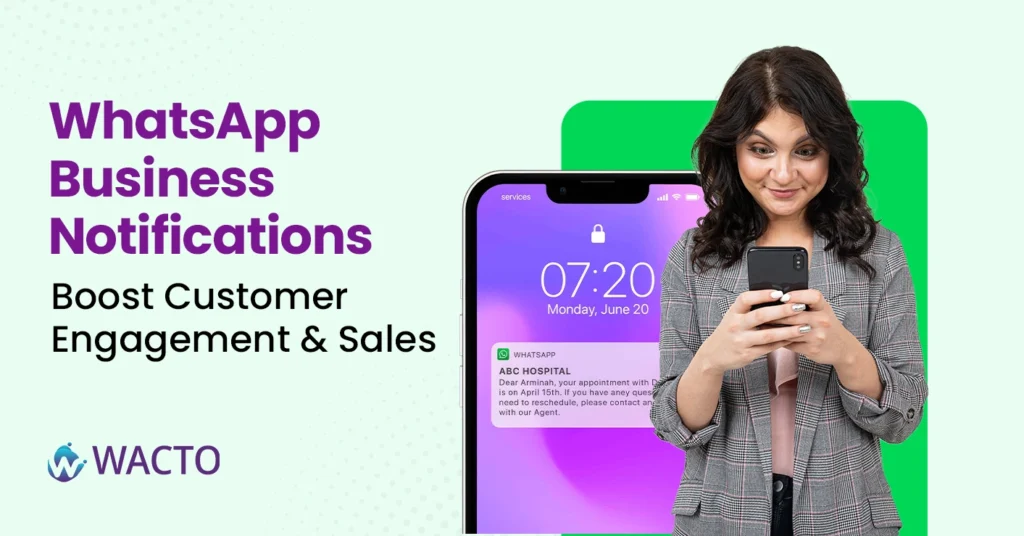
WhatsApp Business Notifications – Boost Customer Engagement & Sales If you have ever received a timely order update or appointment reminder on Whatsapp, you’ve already experienced the power of Whatsapp Business Notifications. In today’s fast-moving digital world, businesses can’t rely on email alone. Customers want instant updates in the apps they actually use. That’s why more companies are shifting to Whatsapp Business Services to keep customers informed, engaged, and ready to buy. In this blog, we’ll explore what Whatsapp Business Notifications are, why they’re such a game-changer for brands, and how you can use them strategically to boost customer engagement and sales. What are Whatsapp Notifications? Think of Whatsapp Notifications as your direct, instant line to your customers. Instead of sending an email that suits unread in an inbox, you send a secure, branded message straight into their Whatsapp chat. These notifications could include: Order Confirmations and delivery updates Appointment reminders and schedule changes Payment alerts and invoice. Personalized offers or Promotions Product restock or back-in-stock alert Important policy updates or announcements This isn’t spam – these are useful, opt-in messages that your customers actually expect and appreciate. Why Businesses are Moving to Whatsapp Online Notifications Over 2 billion people use Whatsapp every month. That’s a staggering potential audience. More importantly, Whatsapp online messages have an open rate of over 90% compared to around 20% for email. In other words, if you want your updates to actually be seen, Whatsapp is where you want to be. Here are some key reasons why companies are adopting Whatsapp Online Notifications. Speed – Messages are delivered instantly, ensuring time-sensitive updates reach customers right away. Trust – Whatsapp is a secure, familiar platform customers already use daily. Engagement – Higher open and response rates mean your notifications actually drive action. Personalization – You can tailor notifications to individual preferences or purchase history. This combination of reach, trust, and immediacy makes Whatsapp a powerful driver of both engagement and sales. How Whatsapp Push Notifications Boost Customer Engagement WhatsApp Push Notifications aren’t just about updates – they’re about keeping customers connected to your brand. Here’s how they enhance engagement. Real-Time Communication: Whether it is a delivery update or a reminder about an abandoned cart, your customers appreciate real time information. This proactive approach strengthens trust. Two-way interaction: Unlike email, Whatsapp allows immediate replies. Customers can respond to your notification to ask a question or request support, making it a two way communication. Personal Touch: With Whatsapp, even automated notifications feel personal. You can use the customer’s name, their order details, and a conversational tone. Frictionless Experience: Customers don’t have to download a new app or log into a separate portal. Everything happens right where they already chat with friends and family. Whatsapp Alert Notifications to Drive Sales Apart from engagement, WhatsApp alert notifications can also help generate revenue directly by guiding customers through every step of the purchasing process. Types of Whatsapp Business Notifications Here are some practical notification categories you can deploy, Transactional Notifications – Order confirmations, shipment updates, refunds and invoices. Appointments and Events Notifications – Reminders, Cancellations, or rescheduling notices. Promotional Notifications – Limited time offers, coupons, product launches, or seasonal discounts. Support Notifications – Ticket updates, service alerts, or policy changes. Re-Engagement Notifications – Cart abandonment, win-back offers, or we miss you messages How to Implement Whatsapp Notifications for Business If you are wondering how to get started, here’s a step by step guide: Best Practices for Whatsapp Notifications Be Timely – Don’t bombard users, send notifications at moments they find useful. Stay Relevant – Personalize messages so they’re directly tied to a customer’s activity. Use Templates – Whatsapp requires message templates for outbound notifications, get them pre approved. Provide an Easy Opt-Out – Make it simple for customers to stop receiving notifications if they choose. Combine Automation With a Human Touch – For complex queries, route the chat to a live agent. Some of the Examples of Whatsapp Business API Notification E-commerce Brand – Sends an order confirmation instantly after purchase, then a shipping update with tracking link, and finally a feedback request after delivery. Healthcare Provider – Notifies patients of upcoming appointments, lab results availability, or new health packages. Financial Institution – Sends payment reminders, loan status updates, or fraud alerts securely. Education Platforms: Sends course enrollment confirmations, class reminders, or exam schedules. These examples show how universal Whatsapp notifications can be regardless of industry. Benefits of Using Whatsapp Business Notifications Over Traditional Channels Integrating Whatsapp Business Notifications with Automation For the best results, combine notifications with Whatsapp Business Automation tools or chatbots. This allows you to: Send notifications automatically based on triggers (orders, appointments, cart abandonment) Handle FAQ’s instantly with an AI Chatbot for Whatsapp Seamlessly transfer the conversation to a live agent if needed. Keep a full chat history synced with your CRM for the future marketing campaigns. This blend of automation and real-time chat is what makes Whatsapp a true powerhouse of business communications. The Future of Whatsapp Business Notifications Whatsapp is continuously adding new features like richer templates, interactive buttons, and even payment integrations. In the near future, businesses will be able to complete entire sales journeys inside Whatsapp from product discovery to checkouts to after sales-support. Early adopters will have a massive competition advantage. Final Thoughts WhatsApp Business Notifications aren’t just a trend; they’re the new standard for instant, high-impact customer communication. By reaching your audience where they already spend time, you increase engagement, drive sales, and build stronger relationships. If you’re not yet using WhatsApp Business API Services or automated notification tools, now is the time to start. With the right strategy, you can transform ordinary updates into extraordinary customer experiences — and that’s how you boost both engagement and revenue.
Best Whatsapp Live Chat Tool – Increase Sales and Conversion
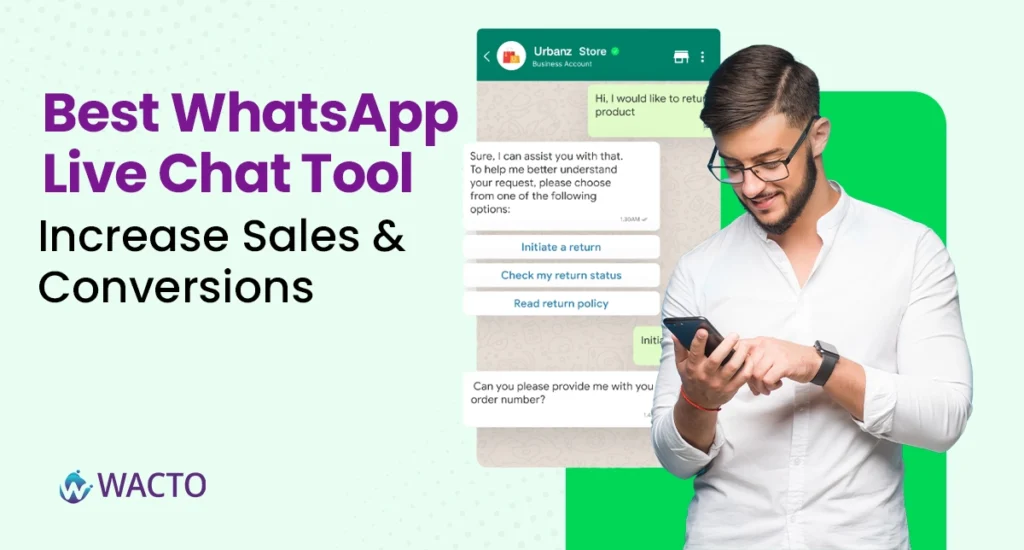
Best Whatsapp Live Chat Tool – Increase Sales and Conversion We’ve all been there: you’re scrolling a website, ready to buy or book, but you’ve got a quick question. You don’t want to fill out a long form or wait for an email reply. You just want a simple chat. That’s where a WhatsApp Live Chat Tool comes in — an instant, familiar way for visitors to connect with your business. This guide breaks down what a WhatsApp Live Chat Tool is, how it works, the key features to look for, and why adding one to your site can increase sales and conversions almost overnight. What is a WhatsApp Live Chat Tool ? Think of a WhatsApp Live Chat Tool as a friendly digital door greeter for your website. It’s usually a small floating icon or button — technically called a WhatsApp Chat Button for Website — that lets visitors open a direct chat with you on WhatsApp in just one tap. Unlike traditional contact forms, this tool shifts the interaction into a channel people already know and trust. They don’t have to install anything or remember another password. They simply click and chat. This makes it ideal for e-commerce shops, service providers, and even B2B companies who want to reduce friction and boost customer engagement. How WhatsApp Live Chat Tool Works? Here’s a quick peek at how most of these tools function behind the scenes: Add the WhatsApp Chat Button to Your Website: Using a plugin, snippet, or integration, you place a small chat icon or a branded button that stands out. Visitors Click the Button: This could be a WhatsApp Contact Button, a WhatsApp Send Button, or even a WhatsApp Share Button, depending on your needs. WhatsApp Opens Instantly: The customer is taken straight to a WhatsApp conversation with your verified business number. Automated Greetings Fire: You can welcome them with a friendly message, FAQs, or quick links. Your Team or Bot Responds: Agents answer queries live, or a chatbot provides instant replies 24/7. Track and Improve: Most tools include analytics to measure chat volume, response times, and conversion rates. This seamless flow is why WhatsApp for customer service has become the go-to choice for businesses that value speed and authenticity. Key Features of the Best Whatsapp Live Chat Software Not all tools are created equal. If you’re searching for the Best Whatsapp Live Chat Software, here’s what to look for, Customizable Buttons: A good Whatsapp Button Generator lets you change colors, text, and placement to match your brand. Multiple Button Types: Whatsapp Contact Button to start chats Whatsapp Send Button to send information instantly. Whatsapp Share Button so visitors can spread your office. Whatsapp Video call button to enable live consultations. Whatsapp Block Button on the admin side to control spam or block unwanted contacts. Automation: Auto greet visitors, send FAQ’s or route chats to the right team. Team Inbox: A shared dashboard where multiple agents can respond to chats without confusion. Templates and Quick Replies: Save time with pre-approved messages. Analytics and Reporting: See which campaigns generate the most conversations and how fast your team responds. The more flexible the tool, the better you can tailor it to your sales funnel. Whatsapp Chat Buttons & Functionalist Explained To make this practical, lets break down the core Whatsapp Chat Buttons you might use: Whatsapp Contact Button: The basic “ chat with us” button that connects visitors directly to your business chat. Whatsapp Share Button: Lets your visitors share a page, product, or offer with their own Whatsapp contacts – a powerful word-of-mouth tool. Whatsapp Send Button: Commonly placed under forms or shopping carts to send data or order details directly to you. Whatsapp Video Call Button: Ads a high-touch option for live demos or consultations- especially useful for services, real estates, or healthcare providers. Whatsapp Block Button: A behind-the-scenes control for your admin team to block spammy users or unwanted leads. Tips for Choosing the Right WhatsApp Live Chat Tool Match your Audience: If most of your customers use Whatsapp daily, a live chat tool is a no-brainer. Check Support & Compliance: Make sure your tool follows Whatsapp’s official policies and is approved as a Whatsapp Business API Provider. Integrate with CRM: Choose a solution that syncs, chats, notes, and leads directly into your sales or marketing system. Test Automation: Experiment with greeting messages, auto-responses, and templates to see which drives more engagement. Putting it All Together Real-Time Engagement: Customers get instant answers instead of waiting hours or days. Trust & Familiarity: People feel safer chatting on Whatsapp than submitting details into a random web form. Reduced Drop-Offs: If a customer hesitates to checkout, a chat button can rescue the sale. More Qualified Leads: Automated pre-chat questions can filter and qualify leads before your team steps in. Personalized Communications: Send product recommendations, discounts, or follow-ups tailored to each chat. In short, adding a Whatsapp Chat Button for Website transforms a passive visitor into an active conversation – and conversations convert. Conclusion Adding a WhatsApp Live Chat Tool isn’t about adding another button to your website, it’s about building a bridge between your visitors and your team. When someone can ask a quick question via Whatsapp Contact Button, share your offer via Whatsapp Share Button, or even jump on a call through a Whatsapp Video Call Button, you’re removing friction and making it easier to buy from you. Combine that with automation, analytics, and a strong CRM connection, and you’ve got a full-fledged conversational commerce engine.
Best AI Chatbot for Healthcare Providers in India
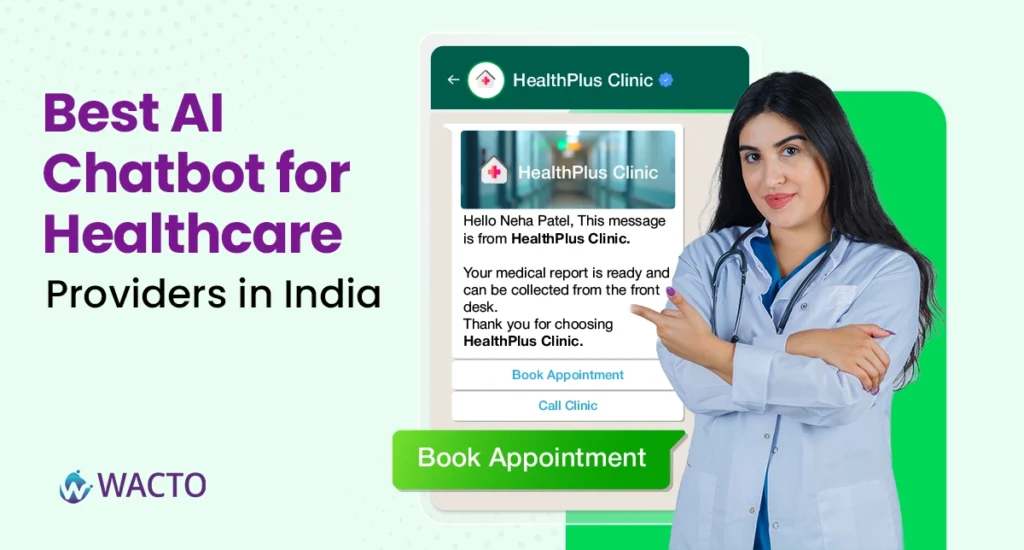
Best AI Chatbot for Healthcare Providers in India Beyond consultations and treatments, healthcare is evolving. Patients increasingly expect quick responses, easy scheduling of appointments, and immediate access to medical information. Hospital staff may get fatigued and response times may increase if these requirements are met manually. Healthcare is no longer just about appointments and prescriptions; it’s about patient experience. In a time when patients expect instant answers, digital access, and personalized care, a WhatsApp Chatbot for Healthcare in India can be the missing link between hospitals, clinics, and patients. Whether you are a multi-speciality hospital or a small clinic, the best healthcare chatbot can transform how you interact with patients. Here’s a closer look at why healthcare providers across India are adopting AI healthcare chatbots. Why Healthcare Providers Need an AI Chatbot Every day, hundreds of patient interactions are managed by healthcare professionals. Managing appointments, responding to frequently asked questions, and following up with patients can all take up important staff time. As a virtual assistant, an AI chatbot answers patient questions instantly, automates repetitive tasks, and allows healthcare professionals to concentrate on providing quality care. Benefits of AI Healthcare Chatbot By making communication quicker, simpler, and more dependable, an AI healthcare chatbot enhances the whole patient experience rather than just automating interactions. Instant Appointment Scheduling – Patients can book, reschedule, or cancel appointments 24/7 via WhatsApp. Automated Triage & FAQ’s – A medical chatbot answers common questions like clinic timings, services, or insurance coverage instantly. Prescription Reminders – Send reminders for medicines, follow-ups, or tests so patients never miss critical care steps. Multilingual Support – In a diverse country like India, healthcare chatbot solutions can converse in multiple languages for wider accessibility. Reduced Administrative Load: Front desk teams save hours daily while still giving patients quick, accurate information. How Healthcare Chatbots Improve Patients Experience A Whatsapp healthcare Chatbot in India bridges the communication gap between patients and providers. Imagine a patient texting your clinic to ask about vaccination availability or lab test reports the chatbot replies instantly, books the appointment, and even follows up with reminders. This not only makes healthcare more efficient but also more human. Patients feel heard and cared for, while hospitals reduce phone congestion and waiting times. Use Cases of Medical Chatbot in Healthcare Appointment Booking & Cancellations -Allow patients to make, modify, or cancel appointments without contacting the hospital. Sharing Lab Reports & Test Results – Let patients know when test results and lab reports are prepared for viewing. Follow-up Care Instructions – Reminders for prescription drugs, follow-up appointments and suggested diagnostic tests shall be sent automatically Insurance & Billing Support – Assistance with insurance and billing by responding to frequently asked questions about payments, insurance claims and billing processes. Doctor Availability Notifications – Updates on doctor availability by Informing patients about doctor availability and share consultation times. Patient Feedback Collection – After consultations or treatments, will collect patient feedback via gathering reviews and satisfaction questionnaires. Emergency Care Guidance – Will give Emergency advice Before patients arrive at the hospital, give them quick instructions and point them in the right direction. These use cases show how an AI chatbot for hospital management systems is not just a tool but a companion to your entire patient journey. Future of Medical Chatbots in Hospitals The future of healthcare chatbot solutions in India looks promising. As AI becomes more advanced, custom medical chatbot development will provide predictive health alerts, personalized wellness advice, and seamless integration with hospital CRMs and EMRs. Patients could receive tailored diet plans, medication adjustments, and even post-operative care tips, all through WhatsApp. Why Choose WhatsApp as Your Platform? WhatsApp is India’s most widely used messaging app. Using it for healthcare communication ensures your patients don’t need to download another app or learn a new interface. With healthcare chatbot integration and CRM, doctors can access real-time patient data, automate follow-ups, and enhance care coordination. Best AI Healthcare Chatbot Provider: Simplify your hospital’s patient management. Healthcare Chatbot Services for Hospitals: Automate repetitive tasks, improve patient satisfaction. Medical Chatbot Solutions for Clinics: Affordable, scalable, and customizable. Healthcare Chatbot Integration with CRM: Connect your existing systems for seamless operations. Buy Healthcare Chatbot Software – Plans & Pricing Our healthcare chatbot services for hospitals come with transparent pricing & plans. Whether you’re a single doctor clinic or a large hospital network, you can pick a package that scales with your needs. Conclusion AI chatbots are helping to improve patient communication and operational efficiency as the healthcare industry quickly adopts the digital revolution. AI-powered chatbots assist hospitals and clinics in providing quicker, more intelligent and patient-focused care by automating appointment scheduling and follow-ups as well as offering immediate assistance and personalized interactions. Through the ease of WhatsApp, healthcare providers can improve patient engagement, expedite routine procedures, and easily integrate with current hospital systems with WACTO’s AI Healthcare Chatbot. WACTO enables clinics, multispecialty hospitals, and diagnostic centers to focus on what really matters—quality healthcare—while providing exceptional patient experiences. Are you prepared to change the way you communicate with patients? Find out how your healthcare business can automate discussions, increase productivity, and provide exceptional patient care with WACTO’s AI Healthcare Chatbot.
Why your Business Needs WhatsApp Campaign Software
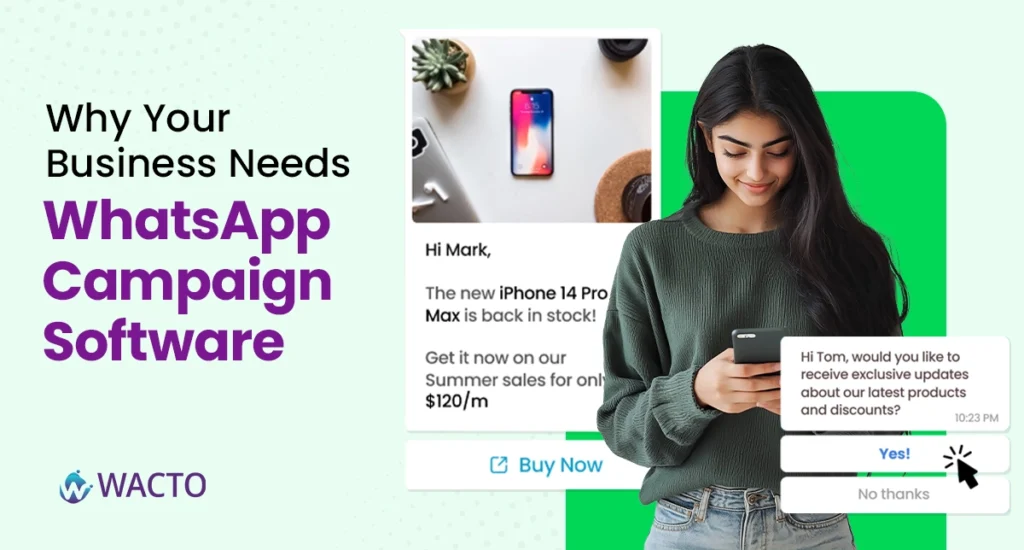
Why your Business Needs WhatsApp Campaign Software If you’re still relying on traditional emails or generic SMS blasts, you’re missing out on one of the most powerful communication channels today. With billions of active users, WhatsApp has become more than a chat app. And with the right WhatsApp Campaign Software, your business can reach customers instantly, personally, and at scale. The customers of today demand instant, accurate, and personal communication, and WhatsApp provides them with just that. WhatsApp is different from other marketing mediums because WhatsApp campaigns ensure instant connection between the business and its customers. Whether you are promoting offers, nurturing leads, or providing customer support, having the right WhatsApp Campaign Software will enable you to develop strong customer relations and grow your business. Key Benefits of Using a WhatsApp Ad Campaign Tool for Marketing WhatsApp Marketing Campaigns make sure that brands can reach out to their clients directly via personalized messages and promotions. Higher open rates and instant engagement Reach your Customers Where They Already Are Unlike emails that get buried in crowded inboxes, WhatsApp campaigns land directly in your customers everyday chat feed. Whether you’re using WhatsApp Campaign Tools, WhatsApp Ad Campaigns, or a full fledged Whatsapp Advertising Campaign, your message is guaranteed more visibility and higher open rates. Scale Your Outreach With Ease Imagine sending thousands of personalized messages at once without breaking a sweat. A WhatsApp Bulk Campaign feature lets you broadcast offers, updates, and alerts to your customer base instantly, eliminating the need for manual copy-pasting and contact juggling. Personalization That Feels Human With WhatsApp marketing campaigns, you’re not just sending mass texts, you’re creating conversations. Using smart segmentation and automation, your Whatsapp Campaign Software can tailor messages to different audience groups, making every interaction feel one-on-one. Run Ads That Converts Faster Facebook and Instagram already let you run Click-to-WhatsApp ads. But when paired with a WhatsApp Ad Campaign Tool, you can instantly follow up with leads, send catalogs, or provide private support directly within the chat. It’s a seamless way to turn curiosity into conversion. Save Time With Automation The Best Whatsapp Campaign Software comes with dashboards and analytics so you can see which campaigns are working, track open rates and clicks, and refine your messaging for even better results. Measure and Improve Performance Modern WhatsApp ad Software comes with dashboards and analytics, so you can see which campaigns are working, track open rates and clicks, and refine your messaging for even better results. Conclusion In today’s mobile-first world, running a WhatsApp campaign isn’t optional; it’s essential. From WhatsApp Bulk Campaigns to WhatsApp ad Campaign Tools, the right platform helps you reach, engage, and convert customers faster than traditional channels ever could.
Top Benefits of a No Code Chatbot Builder for Your Business
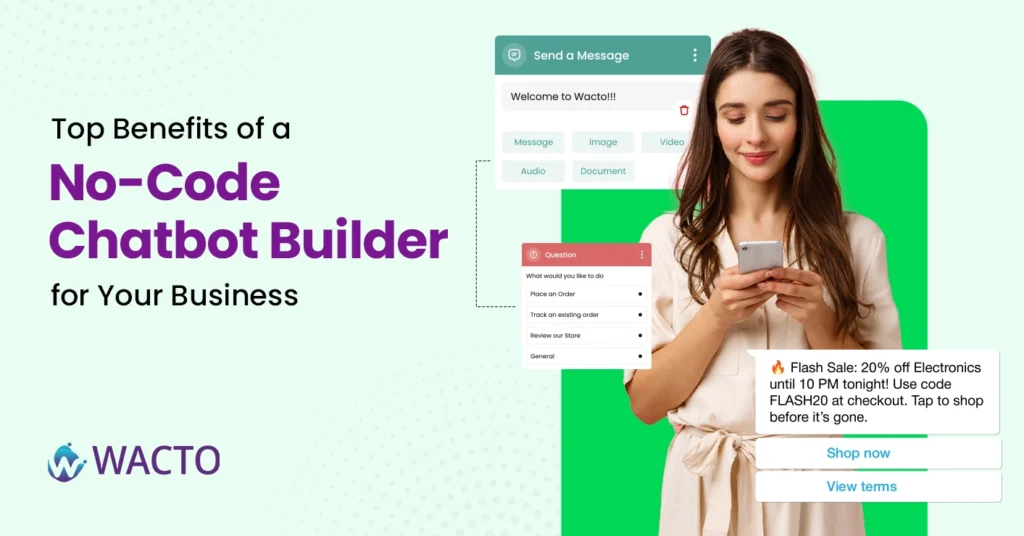
Top Benefits of a No Code Chatbot Builder for Your Business Building chatbots used to mean hiring developers, writing complex code, and waiting weeks before anything went live. Today, a No Code Chatbot Builder changed the game. It allows businesses to create and launch smart, automated chat experiences without a single line of code. Whether you’re a startup or an established brand, no-code tools make automation faster, easier, and far more affordable. No-Code Chatbots for Businesses: Benefits, Cost Savings & Efficiency Traditional chatbot development can be slow and costly. Using the best AI chatbot builder tools means you can iterate, test, and improve in real time – all without the high development costs. This frees up your budget for other marketing or sales efforts. Visual Chatbot Builder with a User-Friendly Interface A visual chatbot builder takes complex logic and turns it into a flowchart you can literally see. You drag boxes, connect actions, and preview conversations instantly. This visual approach reduces errors and ensures a better customer experience from the start. AI and NLP (Natural Language Processing) Support Intent recognition means the bot figures out what you want, no matter how you ask. GPT or AI models jump in for open-ended questions, giving smart, relevant answers. When the bot doesn’t understand, fallback handling keeps things running smoothly instead of just stopping. Sentiment detection spots when you’re frustrated and connects you with a real person right away. CRM, E-Commerce & Third-Party Integrations CRM sync lets you connect with Facebook Catalog, Zoho, or Google Sheets so you can track every conversation without lifting a finger. With Shopify and WooCommerce, you get real-time updates on product info, orders, and shipping. Google Sheets and Zapier make it easy to shove lead data into your spreadsheets or kick off workflows across thousands of apps. Plus, you can take right inside WhatsApp Payment using Razorpay, Stripe, or PayU. Multi-Language Support Automatically figure out the user’s language and reply in it, no need for them to choose or set anything. Support regional languages like Hindi, Tamil, Arabic, Spanish, and more, so people feel right at home. Plug into Google Translate API to offer quick translations during conversations. Create unique conversation flows for each language group, making sure the chat feels personal and relevant. Human Handoff & Live Agent Takeover Trigger-based escalation means conversations jump to a live person if certain words or signs of frustration pop up. You can set agent availability, too—handoffs only happen when someone on your team is actually online. Agents get the full conversation history, so customers don’t have to go over the same thing again and again. And with the multi-agent inbox software, your team can assign, tag, and handle chats together, no confusion. Analytics Dashboard & Performance Reporting Watch how many people actually get your chatbot messages, and see who opens them too. Zero in on the spots where users bail out—spot the weak links and fix them. Count the chats that end in a sale, booking, or sign-up. Finally, pit your bot against human agents and see which one solves more problems, so you know when to rely on automation and when people should step in. Click here Broadcast Messaging & Campaign Automation Bulk broadcast tools let you blast out promos, reminders, or updates to different groups of contacts all at once. Drip campaign software sequences handle those longer, multi-step messages that roll out automatically—like when a user takes some action or hits a certain date. Personalisation tokens add a human touch, dropping in details like someone’s name, their last order, or where they’re located, so every message feels personal. Opt-in and opt-out management keeps you on the right side of WhatsApp’s rules, making sure you always have the user’s consent. No-Code Chatbot Platform for Businesses of All Sizes Whether you’re handling a hundred or a hundred thousand conversations, modern chatbot building platforms can scale as your needs grow. Adding new features or channels becomes as simple as updating your flow, not rewriting code. How to Integrate Chatbots With Your Favorite Tools and CRM The best chatbot builder platforms integrate seamlessly with CRM integrate with CRM systems, payment gateways, and marketing tools. That means your bot can not only chat but also log leads, process orders, and trigger automated emails — making your workflow truly seamless. While CRM Integration Services in India, on one hand, unifies your customer data across all platforms, it ensures that every single interaction is tracked and acted upon in real time. A connected ecosystem boosts efficiency, improves customer experience, and enables the team to make smarter and quicker decisions without much manual effort. How to Build AI Chatbots Without Coding – No Code Needed With a No Code Chatbot Builder, your marketing or support team can design and deploy chatbots themselves. There’s no need to rely on expensive developers or long turnaround times. Everything is drag-and-drop, making it perfect for non-technical teams. Build a WhatsApp Chatbot in Minutes Most customers today prefer WhatsApp for quick communication. A good WhatsApp Chatbot Builder lets you set up automated replies, lead capture flows, and FAQ’s directly inside WhatsApp. This helps you connect with your audience where they’re already active. Enhance Customer Experience Customers get fast answers, instant updates, and 24/7 support. You get higher satisfaction scores and fewer support tickets. It’s a win-win that builds loyalty over time. Conclusion No Code Chatbot Builder empowers businesses to automate customer communication quickly, affordably, and without technical headaches. From WhatsApp to websites, you can design chatbots that drive leads, improve support, and create more meaningful interactions with your customers.
Best Messaging App for Business | Secure & Smart Communication
Best Messaging App for Business | Secure & Smart Communication If your business still relies on email chains or scattered phone calls to communicate with customers, you’re leaving opportunities (and time) on the table. In today’s world, people expect quick, secure, and personal communication, and they want it where they’re already active. That’s why a Messaging app for Business has become essential for companies of all sizes. Why Business Text Messaging Apps Beat Old-School Channels Emails can easily be lost in cyberspace and calls may not be returned, but a quick text message is viewed in an instant. This is why having a group texting app for business purposes can greatly help companies reach their customers quickly and efficiently. Whether you are looking for a basic group text for business communication solution or a comprehensive text message marketing software, the right tool will benefit your team: Whether it is a text message app for business or an advanced WhatsApp business automation platform, the right tool helps you: Act quickly in real-time and never miss a customer inquiry Send bulk messages to customers easily for offers, updates, and reminders Share rich media such as PDFs, videos, product images, and links Perform text message marketing campaigns to increase customer engagement and sales Keep secure and trackable conversation history for improved customer management WhatsApp Messaging Platforms for Business Communication One of the biggest advantages of using business texting platforms like WhatsApp for business is scale. You’re no longer stuck sending messages one by one. With a bulk message sender for WhatsApp, you can: Send multiple messages on Whatsapp at once to different customer segments Launch promotional campaigns or reminders instantly. Stay compliant while reaching thousands of contacts simultaneously. This kind of bulk messaging capability on WhatsApp turns your outreach from a manual chore into a powerful marketing channel. WhatsApp Auto Reply for Happier Customers Customers may not like typing a lot of messages, but you can fix this by using an automatic WhatsApp message sender. This will send instant messages, keep your audience engaged, and save your team a lot of time. Using a WhatsApp Business auto reply message will ensure that you are always responding to customers, no matter the time. Greet new leads instantly with welcome messages Confirm bookings or orders right after they’re placed Follow up with reminders or offers at the perfect time Automatic message WhatsApp will ensure that every customer gets an instant response, even during peak hours. An auto reply message on WhatsApp Business will ensure that no question goes unanswered. WhatsApp Automation Messaging Software for Business Smart Companies are already leveraging WhatsApp marketing automation to handle everything from lead capture to support tickets. Instead of juggling multiple apps, you bring everything into one chat interface where: Orders are confirmed. Appointments are scheduled. FAQ’s are answered automatically. Campaign performance is tracked With the proper texting software for business, your messaging app will become more than just a means of communication—it will become a tool for generating revenue and building your business. Top WhatsApp Texting Solutions for Business Growth In industries like finance, healthcare, or education, privacy and reliability aren’t negotiable. A text message app for business with encryption and compliance ready features gives both you and your customers peace of mind. And because Whatsapp has global trust and recognition, it’s an easy win for building confidence among your audience. Final Thoughts The best instant messaging apps for business are more than just chat tools. They’re your frontline for sales, support, and brand-building. By adopting bulk messaging WhatsApp tools and WhatsApp automatic message sender features, you’re future-proofing your customer communication. It’s fast, it’s scalable, and it’s secure — and, when paired with thoughtful automation, it can turn everyday chats into long-term relationships.